
Halal Travel in Indonesia: What Every Muslim Traveller Should Know
From halal food on every corner to mosques in every village, Indonesia is one of the most welcoming destinations on earth for Muslim travellers. Here's your complete guide.
Halal Travel in Indonesia: What Every Muslim Traveller Should Know
Indonesia is the world's largest Muslim-majority country — and it shows. With over 270 million people, the majority of whom are Muslim, halal food, prayer spaces, and Islamic culture are woven into the fabric of daily life here in a way that few other destinations can match.
For Arabic-speaking travellers used to planning carefully around halal requirements, Indonesia is a revelation. Here's everything you need to know before you go.
Halal Food is the Default, Not the Exception
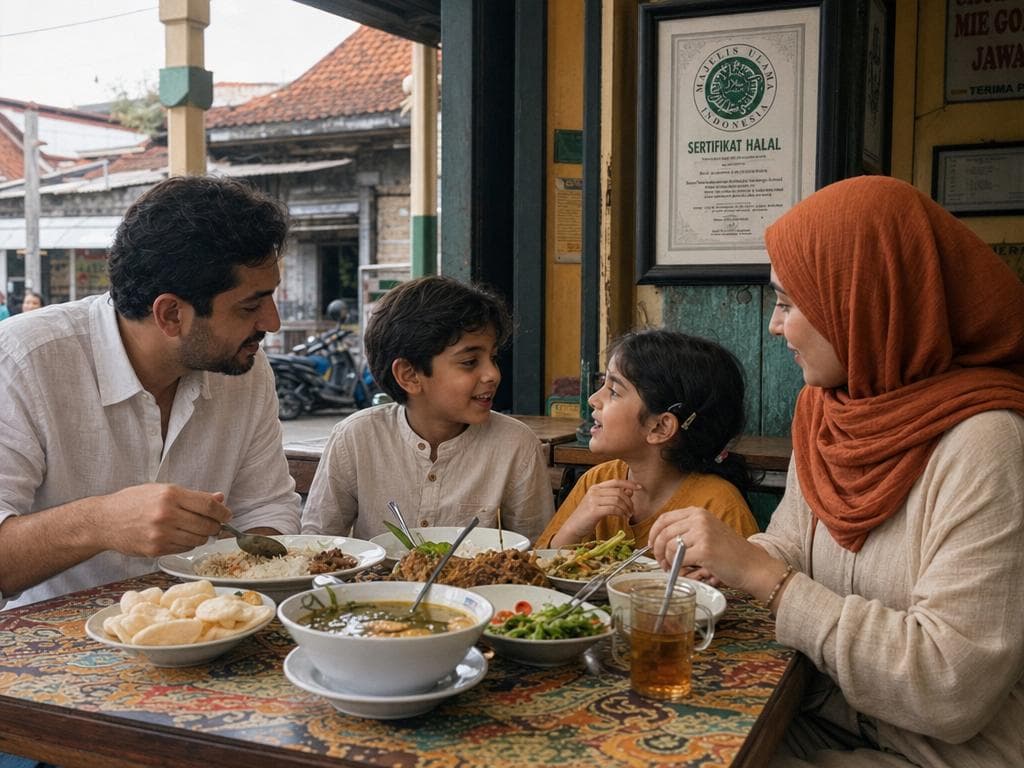
Unlike many popular travel destinations where halal food requires research and planning, in Indonesia it's simply assumed. The vast majority of local warungs (small eateries), street stalls, and neighbourhood restaurants are halal by default.
For extra assurance, look for the green MUI halal certificate — issued by the Majelis Ulama Indonesia, Indonesia's official Islamic scholars council. You'll find it displayed on the door or menu at certified restaurants and food stalls across the country.
In Bali, halal restaurants have grown significantly in areas like Seminyak, Nusa Dua, and Kuta to cater to the large influx of Muslim visitors from the Gulf, Malaysia, and beyond.
Practical tip: Indonesian cuisine is generally free of pork by default in Muslim-majority areas. Bali is the exception — always check on Hindu-majority Bali.
Prayer is Never Far Away
Indonesia has more mosques per square kilometre than almost any country on earth. In cities, towns, and even small roadside villages, you'll hear the adhan five times a day. Prayer rooms — called musolla or musholla — are found in:
- Shopping malls and department stores
- Domestic and international airports
- Major hotels and resorts
- Petrol stations and highway rest stops
Bali's Ngurah Rai International Airport and Jakarta's Soekarno-Hatta both have well-equipped prayer facilities with wudu stations, so you can pray comfortably even during layovers.
What to Know About Bali
Bali is a Hindu-majority island, which makes it different from the rest of Indonesia. Alcohol is widely available in tourist areas, pork appears on many menus, and the cultural atmosphere is more permissive than elsewhere in the archipelago.
This doesn't make Bali off-limits — far from it. But it does mean Muslim travellers should:
- Seek out certified halal restaurants rather than assuming all food is halal
- Choose a Muslim-friendly hotel (many are available, particularly in Nusa Dua)
- Be aware that alcohol may be served at nearby tables in mixed restaurants
If you prefer a more straightforwardly Islamic environment, Lombok is an excellent alternative — or a perfect complement to a Bali trip.
Lombok: The Muslim Traveller's Island
Lombok sits just east of Bali and is everything Bali is not: quiet, uncrowded, and overwhelmingly Muslim. The Sasak people — Lombok's indigenous inhabitants — are devout Muslims, and Islamic culture shapes daily life on the island.
Halal food is ubiquitous, alcohol is rarely encountered outside a handful of tourist resorts, and the mosques are beautiful. Add to this some of Indonesia's most stunning beaches, the drama of Mount Rinjani, and a fraction of Bali's tourist traffic — and Lombok becomes one of Indonesia's most compelling destinations for Muslim travellers.
Java, Sumatra, and Beyond
Outside Bali, halal travel across Indonesia is effortless:
- Java: Home to Borobudur, Prambanan, and vibrant cities like Yogyakarta and Malang. Halal food is everywhere, and the culture is deeply Islamic.
- Sumatra: Aceh, on Sumatra's northern tip, is one of the most devoutly Islamic regions in the world and a fascinating cultural destination. Lake Toba is one of the most spectacular natural sites in Southeast Asia.
- Sulawesi and Raja Ampat: More remote, and halal food requires a little more planning — but these destinations reward the effort with extraordinary nature.
Tips for Arabic-Speaking Travellers
A few things worth knowing for Gulf-region travellers in particular:
- Arabic is not widely spoken outside of a handful of tourist businesses — English is your best lingua franca
- Prayer times shift across Indonesia's three time zones, so adjust your schedule if crossing from west to east
- Ramadan is observed across Muslim-majority Indonesia, with iftar gatherings and Tarawih prayers widely available — a wonderful time to travel
Plan With Raha & Roam
Every itinerary we craft at Raha & Roam is designed with Muslim travellers in mind — from halal-certified restaurants to prayer-friendly hotels, from qibla-facing rooms to family-appropriate activities. We handle the details so you can focus on the experience.
Ready to see Indonesia the way it was meant to be experienced? Get in touch and let us plan your journey.